A boutique resort feels truly luxurious when architecture, service, privacy, and a strong sense of place come together to create a memorable guest experience. While high-end amenities contribute to luxury, the most successful boutique resorts are defined by thoughtful design, seamless indoor-outdoor living, exceptional craftsmanship, personalized experiences, and meaningful connections to their surroundings.
Unlike larger hospitality properties that often rely on scale, boutique resorts create luxury through exclusivity, authenticity, and attention to detail. Architecture plays a central role in shaping these experiences, influencing everything from arrival and accommodations to views, wellness amenities, and guest comfort.
What Does a Boutique Resort Architect Do?
A boutique resort architect designs luxury hospitality destinations that create memorable guest experiences while responding to the character of a site. Their responsibilities typically include master planning, guest experience design, resort amenities, accommodations, circulation, and integrating architecture with the surrounding landscape.
Below are the key elements that make a boutique resort feel genuinely luxurious.
Luxury Is About Experience, Not Size
Many travelers today are moving away from large-scale resorts in favor of more intimate destinations that offer a greater sense of exclusivity.
Luxury is no longer measured by how large a property is. Instead, it is often defined by how thoughtfully every aspect of the guest experience has been considered.
A boutique resort may have fewer rooms, but it often provides a stronger connection to the landscape, more personalized service, and architectural details that make the destination feel distinctive and memorable.
The goal is not to impress guests with scale but to create an environment that feels effortless, refined, and meaningful.
Thoughtful Arrival Experiences
The luxury experience begins long before guests enter their rooms.
Arrival sequences are among the most important architectural moments within any hospitality project. The approach to a property, the first framed view, the transition into a courtyard or lobby, and the initial connection to the surrounding landscape all contribute to the guest’s perception of the resort.
Exceptional boutique resorts carefully choreograph these moments.
Whether arriving through a shaded desert courtyard, a mountain drive lined with native vegetation, or an oceanfront arrival pavilion overlooking the water, guests should immediately feel that they have arrived somewhere special.
Great architecture creates anticipation while establishing the character of the destination from the very beginning.
Architecture That Frames the Landscape
One of the defining characteristics of luxury hospitality is a strong relationship between architecture and its surroundings.
The most successful boutique resorts do not compete with the landscape. Instead, they celebrate it.
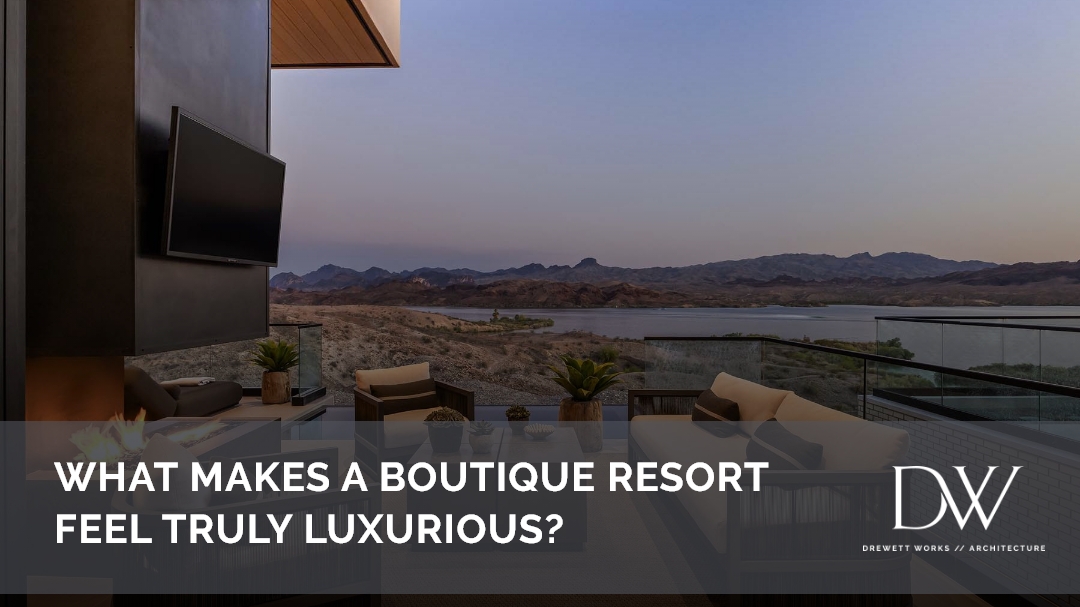
Architecture can frame mountain views, capture ocean horizons, reveal desert sunsets, or create intimate garden experiences. Carefully positioned buildings, outdoor spaces, and circulation paths help guests engage with the environment throughout their stay.
Rather than serving as a backdrop, the landscape becomes an essential part of the guest experience.
This connection to place is often what distinguishes a truly memorable resort from one that feels interchangeable with countless others.
Seamless Indoor-Outdoor Living
Many luxury destinations are defined by their climate, making indoor-outdoor living a key component of hospitality design.
Open-air lounges, covered terraces, outdoor dining spaces, courtyards, and resort pools allow guests to remain connected to their surroundings throughout the day.
The transition between interior and exterior environments should feel effortless. When designed well, guests move naturally between spaces without feeling constrained by walls or boundaries.
This approach is particularly important in destinations known for favorable weather, including coastal regions, mountain retreats, and desert environments.
The ability to experience nature while enjoying comfort and privacy has become one of the hallmarks of modern luxury hospitality.
Privacy and Exclusivity
Luxury travelers increasingly value privacy.
Boutique resorts often create a sense of exclusivity through thoughtful planning rather than physical separation alone. Architectural strategies such as carefully oriented guest accommodations, private outdoor spaces, landscaped buffers, and discreet circulation routes help create intimate environments without sacrificing openness.
Guests should feel as though they have room to relax, recharge, and enjoy the destination on their own terms.
The most successful resorts strike a balance between opportunities for social engagement and spaces for personal retreat.
Material Authenticity and Craftsmanship
Luxury architecture often reveals itself through subtle details rather than obvious displays of wealth.
Natural stone, wood, handcrafted finishes, textured materials, and thoughtful detailing create environments that feel timeless and authentic.
Rather than relying on trends, exceptional boutique resorts prioritize materials that reflect the character of the region while aging gracefully over time.
Guests may not consciously notice every design decision, but they often recognize when a space feels genuine, well-crafted, and connected to its setting.
Authenticity creates a level of sophistication that cannot be replicated through decoration alone.
Wellness and Lifestyle Amenities
Wellness has become a major driver of luxury hospitality development.
Today’s travelers increasingly seek destinations that support physical, mental, and emotional well-being. Architecture plays an important role in creating these experiences.
Popular wellness-focused features include:
- Spa environments
- Fitness facilities
- Outdoor movement spaces
- Meditation gardens
- Walking trails
- Resort pools
- Wellness programming areas
When integrated thoughtfully, these amenities become part of a larger architectural experience that encourages relaxation and connection.
The Power of Architectural Restraint
One of the most overlooked characteristics of luxury design is restraint.
The world’s most admired hospitality destinations often avoid excessive ornamentation or unnecessary complexity. Instead, they focus on proportion, materials, craftsmanship, natural light, and a strong connection to place.
This sense of restraint creates environments that feel calm, sophisticated, and enduring.
Rather than chasing trends, timeless architecture allows the experience itself to take center stage.
Creating Experiences Guests Remember
Ultimately, luxury is measured by how a place makes people feel.
The most successful boutique resorts create lasting memories through thoughtful design, meaningful connections to their surroundings, and carefully crafted guest experiences. Architecture helps shape every interaction, from arrival and exploration to relaxation and departure.
When every design decision supports a larger vision, the result is a destination that guests remember, recommend, and return to for years to come.
Considering Your Next Hospitality Project?
Creating a luxury hospitality destination requires more than exceptional amenities. It requires architecture that responds to its setting, supports the guest experience, and reflects the character of the destination itself.
Whether planning a boutique resort, branded residential community, or hospitality-driven development, Drewett Works collaborates with clients to create distinctive environments rooted in place and designed for lasting impact. To discuss an upcoming hospitality project, contact Drewett Works.