At the center of every successful boutique resort is architecture that shapes how guests interact with the property, the landscape, and one another. A boutique resort architect plays a critical role in transforming a vision into an environment that delivers both exceptional guest experiences and long-term value for owners and developers.
Luxury travelers are increasingly seeking experiences that feel personal, authentic, and connected to their surroundings. As a result, boutique resorts have become one of the fastest-growing segments of the hospitality industry. Unlike large-scale hotel developments that often prioritize consistency and scale, boutique resorts focus on creating memorable experiences through thoughtful design, distinctive character, and a strong sense of place.
The Growing Appeal of Boutique Resorts
Today’s luxury travelers are looking for something different. They want destinations that feel unique rather than standardized. They want meaningful connections to local culture, natural surroundings, and the overall experience of a place.
This shift has created growing demand for boutique resorts in mountain destinations, coastal regions, desert environments, and emerging luxury markets around the world. Rather than competing on size, boutique resorts compete on quality, design, atmosphere, and authenticity.
Architecture is often the foundation that makes those experiences possible.
How Boutique Resorts Differ from Traditional Resorts
While every hospitality project is unique, boutique resorts typically emphasize a more intimate guest experience than larger resort developments.
Boutique resorts often feature:
- Smaller room counts
- Highly personalized guest experiences
- Strong connections to the surrounding landscape
- Distinctive architectural character
- Unique amenities and gathering spaces
- Greater emphasis on privacy and exclusivity
Because of these priorities, the architectural approach is often very different from that of a large hotel or resort complex.
A boutique resort architect focuses not only on the buildings themselves but also on how guests experience every moment of their stay.
The Role of a Boutique Resort Architect
A boutique resort architect is responsible for much more than designing attractive buildings. The role involves balancing guest experience, operational efficiency, environmental considerations, and long-term business goals.
Site Planning and Master Planning
Every successful hospitality project begins with understanding the site.
Architects evaluate topography, views, climate conditions, access points, circulation patterns, and opportunities to create memorable guest experiences. The best boutique resorts take advantage of their natural surroundings rather than competing with them.
Whether designing along a coastline, within a mountain setting, or in a desert environment, thoughtful site planning helps create a resort that feels connected to its location.
Creating the Guest Journey
One of the most important responsibilities of a resort architect is designing the guest experience from arrival to departure.
This includes:
- Arrival sequences
- Entry courtyards
- Reception spaces
- Guest accommodations
- Restaurants and gathering areas
- Wellness facilities
- Outdoor amenities
- View corridors
Every transition contributes to how guests perceive the property.
When thoughtfully designed, architecture creates a seamless experience that feels intuitive, comfortable, and memorable.
Integrating Indoor and Outdoor Living
Many of today’s most successful boutique resorts blur the boundaries between interior and exterior spaces.
Covered terraces, open-air lounges, courtyards, pools, and outdoor dining environments allow guests to engage with the climate and landscape throughout their stay.
This connection to nature has become a defining characteristic of luxury hospitality design, particularly in destinations known for their scenery and climate.
Creating a Strong Sense of Place
One of the defining characteristics of successful boutique resorts is their ability to feel unique to their location.
Guests should not feel as though they could be anywhere in the world. Instead, the architecture should reflect the culture, climate, materials, and natural beauty of the region.
This concept is often referred to as creating a sense of place.
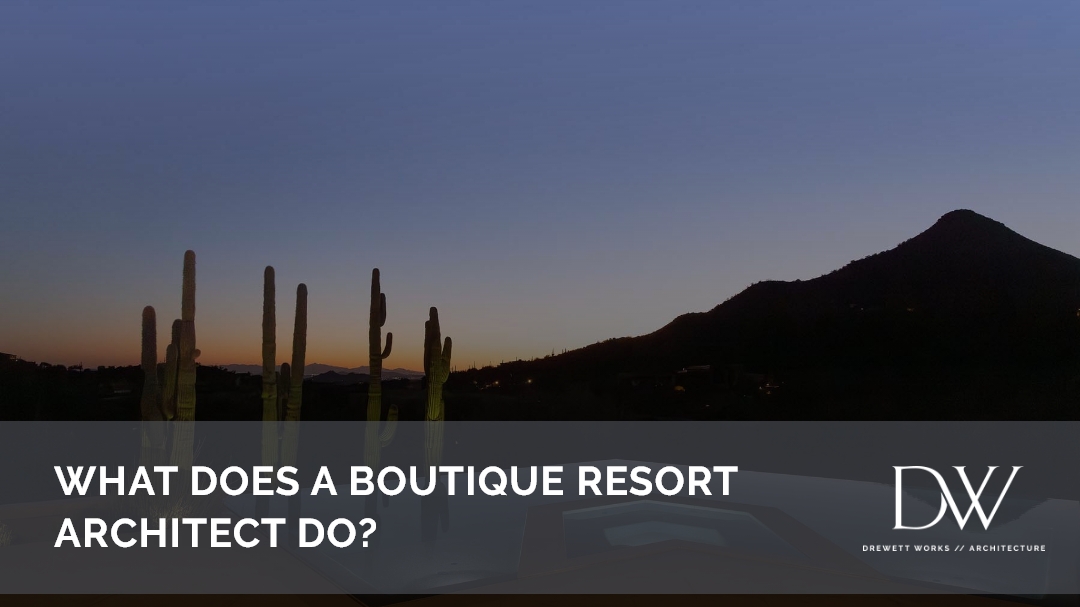
In desert destinations, architecture may emphasize shade, natural stone, and expansive views. In coastal environments, buildings may be designed to capture ocean breezes and frame water views. In mountain regions, architecture often responds to terrain, seasonal conditions, and dramatic landscapes.
When architecture reflects its surroundings, the guest experience becomes richer and more memorable.
Balancing Luxury and Operational Efficiency
A successful resort must deliver exceptional experiences while also functioning efficiently behind the scenes.
Architects work closely with developers, operators, and consultants to ensure that guest spaces, service areas, circulation routes, and support facilities are carefully coordinated.
This balance helps improve:
- Guest satisfaction
- Operational efficiency
- Staff productivity
- Long-term maintenance
- Financial performance
Thoughtful planning allows a resort to operate smoothly without compromising the quality of the guest experience.
Architecture as a Competitive Advantage
The luxury hospitality market continues to become more competitive. Guests have more choices than ever before, and developers are constantly looking for ways to differentiate their projects.
Architecture is often one of the most powerful tools available.
A well-designed boutique resort can:
- Create a memorable brand identity
- Increase guest engagement
- Support premium room rates
- Generate positive publicity
- Encourage repeat visits
- Increase long-term property value
The most successful hospitality destinations understand that architecture is not simply a design exercise—it is a strategic investment in the overall guest experience.
The Future of Boutique Resort Architecture
As traveler expectations continue to evolve, boutique resorts will likely place even greater emphasis on wellness, sustainability, authenticity, and experiential design.
Guests increasingly seek destinations that feel connected to their surroundings and offer experiences that cannot be replicated elsewhere.
Architecture will continue to play a central role in meeting those expectations by creating environments that are both beautiful and meaningful.
For developers, operators, and hospitality brands, investing in thoughtful architectural design is one of the most effective ways to create lasting value and deliver experiences that resonate with today’s luxury traveler.
Exploring a New Hospitality Opportunity?
Whether planning a boutique resort, branded residential community, luxury clubhouse, or destination-driven hospitality experience, the architectural decisions made early in the process can have a lasting impact on both guest experience and long-term project success.
Drewett Works partners with developers, hospitality brands, and visionary property owners to create distinctive environments that respond to their setting while delivering memorable experiences. If you are exploring a hospitality project and would like to discuss your vision, contact Drewett Works to start the conversation.