Developers are increasingly investing in boutique resorts because they offer opportunities for market differentiation, stronger brand identity, premium positioning, and highly personalized guest experiences. As luxury travelers seek more authentic and meaningful destinations, boutique hospitality projects have become one of the fastest-growing segments of the hospitality industry.
Unlike large-scale resorts that often compete on size and amenities, boutique resorts compete through distinctive architecture, a strong sense of place, and memorable guest experiences. This allows developers to create destinations that stand apart in competitive markets while building long-term value through design, guest loyalty, and brand recognition.
From coastal retreats and mountain destinations to desert resorts and emerging luxury markets, boutique hospitality developments continue to attract both travelers and investors. As guest expectations evolve, many developers see boutique resorts as an opportunity to create enduring destinations that deliver experiences guests cannot find elsewhere.
The Shift Toward Experience-Driven Travel
Today’s luxury travelers often prioritize experiences over amenities alone.
Rather than simply booking accommodations, guests increasingly seek destinations that reflect their lifestyle preferences and personal interests. They want memorable experiences, meaningful connections to local culture, and environments that feel authentic rather than standardized.
This trend has created strong demand for hospitality destinations that offer:
- Unique architectural character
- Personalized guest experiences
- Strong connections to the landscape
- Wellness-focused amenities
- Curated programming
- A sense of exclusivity
Boutique resorts are uniquely positioned to meet these expectations.
Boutique Resorts Create Strong Market Differentiation
One of the greatest challenges facing hospitality developers is differentiation.
Guests have more choices than ever before, making it increasingly difficult for properties to stand out. Boutique resorts often use architecture, branding, and guest experience to create a distinctive identity that cannot easily be replicated.
Rather than competing solely on room count or amenities, boutique resorts compete through character, design, and emotional connection.
This differentiation can help attract travelers seeking experiences that feel unique and memorable.
Design Becomes a Competitive Advantage
Architecture is often one of the most powerful assets within a boutique hospitality project.
Thoughtful design helps establish a property’s identity while creating memorable guest experiences. Every aspect of the resort—from arrival sequences and guest accommodations to restaurants, wellness facilities, and outdoor gathering spaces—contributes to the overall perception of the destination.
For developers, investing in architecture can create long-term value by strengthening brand recognition and supporting premium positioning within the market.
The most successful boutique resorts often become known as much for their design as their location.
Boutique Resorts Appeal to High-Value Travelers
Luxury travelers increasingly seek destinations that feel personal and exclusive.
Many guests are willing to pay a premium for experiences that provide privacy, authenticity, and exceptional design. Boutique resorts often attract visitors who value quality over quantity and who are seeking destinations that align with their lifestyle preferences.
These travelers frequently become repeat guests and brand advocates, helping support long-term success for hospitality developments.
Wellness Is Driving Hospitality Growth
Wellness continues to influence travel decisions across luxury hospitality markets.
Many boutique resorts integrate wellness into the overall guest experience through architecture, programming, and amenities. Spa facilities, outdoor fitness spaces, meditation gardens, nature-based experiences, and wellness-focused accommodations have become increasingly important components of hospitality development.
Architectural design plays a critical role in supporting these experiences by creating environments that encourage relaxation, restoration, and connection to nature.
Boutique Resorts Support Stronger Brand Identity
Hospitality brands are increasingly focused on creating experiences that resonate emotionally with guests.
Boutique resorts provide opportunities to develop highly curated environments that reflect a clear vision and identity. Architecture, interiors, landscape design, and guest programming can work together to tell a cohesive story.
For developers and operators, this stronger brand identity can help create loyalty while differentiating the property from competing destinations.
Location-Driven Hospitality Continues to Grow
Many of today’s most successful hospitality projects are deeply rooted in their surroundings.
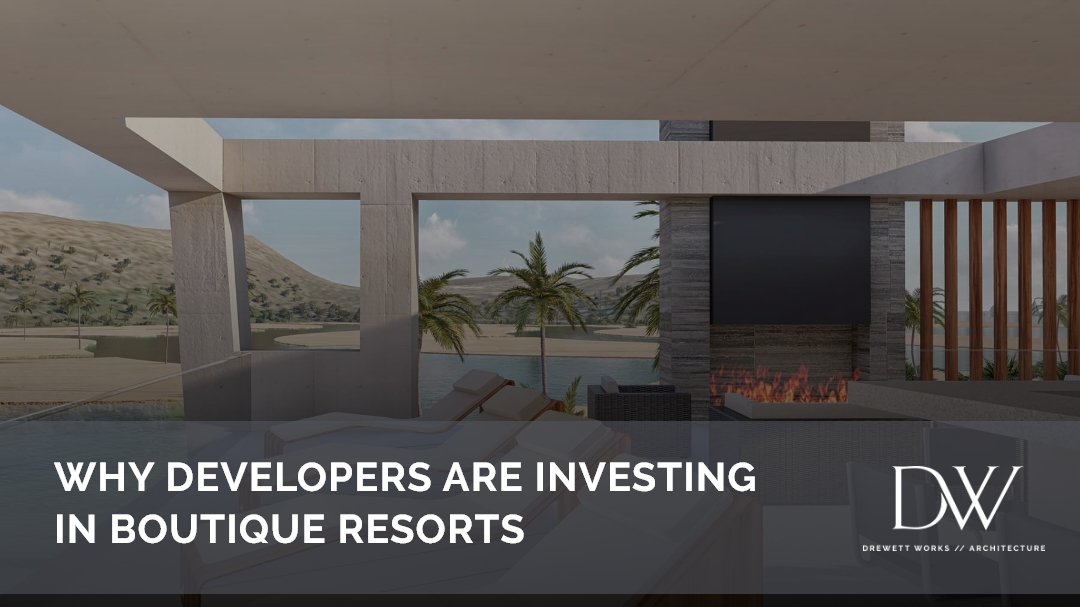
Whether located in a mountain setting, along a coastline, or within a dramatic desert landscape, boutique resorts often embrace architecture that responds to local conditions and celebrates the character of the region.
This approach helps create destinations that feel authentic and connected to place rather than interchangeable with properties elsewhere.
As travelers increasingly seek immersive experiences, location-driven design has become an important factor in hospitality success.
Long-Term Value Through Thoughtful Design
While hospitality trends continue to evolve, thoughtful architecture remains one of the most durable investments a developer can make.
Resorts that prioritize design often benefit from:
- Stronger brand recognition
- Increased guest satisfaction
- Greater market differentiation
- Enhanced long-term value
- Increased media attention
- Stronger emotional connections with guests
Rather than following short-term trends, successful hospitality projects focus on creating environments that feel timeless and enduring.
The Future of Boutique Hospitality
Demand for boutique hospitality experiences continues to grow as travelers seek destinations that feel authentic, experiential, and deeply connected to their surroundings.
For developers, boutique resorts offer opportunities to create distinctive properties that stand apart in an increasingly competitive marketplace. Architecture serves as a critical component of this strategy, helping shape guest experiences while supporting long-term business goals.
As luxury travel continues to evolve, thoughtfully designed boutique resorts are likely to remain among the most sought-after hospitality destinations worldwide.
Create an Unforgettable Guest Experience
Successful hospitality destinations begin with a clear vision and thoughtful design strategy. Whether developing a boutique resort, branded residential community, luxury clubhouse, or destination-driven hospitality experience, architecture can help create lasting value while shaping memorable guest experiences.
Drewett Works collaborates with developers and hospitality visionaries to create distinctive environments that respond to their setting and support long-term success. To discuss an upcoming hospitality project, contact Drewett Works.