Architecture shapes the guest experience in boutique resorts by influencing how visitors arrive, navigate the property, interact with amenities, experience the surrounding landscape, and connect emotionally with a destination. From the first impression at arrival to the final moments before departure, thoughtful design helps create memorable experiences that encourage guests to return and recommend the property to others.
Unlike larger hospitality developments that often prioritize efficiency and scale, boutique resorts rely on architecture to create a strong sense of place, exclusivity, and authenticity. Every pathway, gathering space, view corridor, and guest accommodation contributes to the overall experience, making architecture one of the most powerful tools for shaping how a destination is perceived and remembered.
The most successful boutique resorts understand that architecture is not simply a backdrop for hospitality—it is an essential part of the guest experience itself.
Great Hospitality Begins Before Guests Arrive
Guest impressions begin well before they step into a lobby or check into a room.
The approach to a property, the surrounding landscape, and the first glimpse of the architecture all help establish expectations. Luxury hospitality destinations often use architecture to create a sense of anticipation, gradually revealing the experience rather than presenting everything at once.
Whether guests are arriving at a mountain retreat, a coastal resort, or a desert destination, the journey itself becomes part of the experience.
Thoughtful planning transforms arrival from a logistical necessity into an emotional moment that sets the tone for the entire stay.
The Power of Arrival Sequences
One of the most important yet often overlooked aspects of hospitality design is the arrival sequence.
Successful boutique resorts carefully choreograph the guest’s transition from the outside world into the resort environment. Driveways, courtyards, entry pavilions, reception spaces, and framed views all contribute to the experience.
Rather than moving directly from parking lot to front desk, guests may pass through landscaped courtyards, shaded walkways, water features, or open-air gathering spaces that gradually introduce the character of the destination.
These moments help create a feeling of discovery while establishing an emotional connection with the property.
Architecture Creates Emotional Connections
The best hospitality architecture does more than provide shelter. It creates emotional responses.
Guests may not always understand why a space feels calming, inspiring, or memorable, but architecture often plays a major role. Proportion, scale, materials, natural light, views, and spatial relationships all influence how people experience a place.
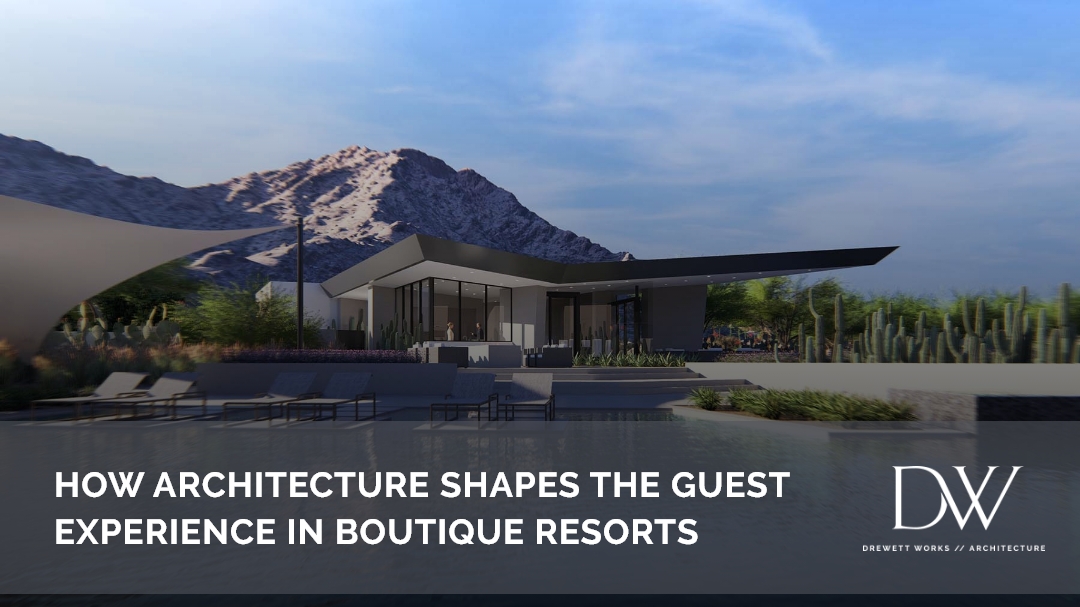
A resort overlooking the ocean may use architecture to frame dramatic views. A mountain retreat may create a sense of refuge and warmth. A desert resort may emphasize shade, texture, and connections to the surrounding landscape.
These design decisions shape how guests remember the destination and how strongly they connect with it.
Guiding Movement Throughout the Property
Successful hospitality environments feel intuitive.
Guests should naturally understand how to move through a property without relying heavily on signage or instructions. Architecture accomplishes this by establishing clear circulation patterns and visual cues.
Pathways, courtyards, gathering spaces, and view corridors help guide movement while encouraging exploration.
When circulation is thoughtfully designed, guests experience the resort more comfortably and discover amenities organically. This creates a sense of ease that contributes significantly to overall satisfaction.
Balancing Social Spaces and Private Retreats
One of the defining characteristics of luxury hospitality is the ability to offer both connection and privacy.
Guests often seek opportunities to gather, socialize, and participate in shared experiences. At the same time, they value personal space and moments of solitude.
Architecture helps balance these needs through careful planning.
Popular hospitality environments often include:
- Outdoor lounges
- Dining terraces
- Poolside gathering areas
- Event spaces
- Private patios
- Quiet gardens
- Secluded guest accommodations
By providing a variety of experiences, resorts can appeal to different preferences while enhancing guest comfort.
The Role of Natural Light
Natural light has a powerful influence on how guests perceive a destination.
Spaces that feel bright, open, and connected to the outdoors often create a greater sense of well-being and comfort. Architects use orientation, window placement, courtyards, and shading strategies to maximize daylight while maintaining comfort throughout the day.
Natural light can also highlight materials, create dramatic visual effects, and reinforce connections between interior and exterior environments.
When used thoughtfully, it becomes one of the most effective tools for enhancing the guest experience.
Framing Views and Creating Memorable Moments
Luxury travelers are often drawn to destinations because of their landscapes.
Whether overlooking mountains, coastlines, deserts, forests, or urban skylines, views can become some of the most memorable aspects of a stay.
Architecture helps capture and celebrate these opportunities.
Buildings can be positioned to frame specific vistas, create dramatic view corridors, and reveal the landscape gradually as guests move throughout the property.
These carefully designed moments often become defining memories that guests associate with the destination long after their visit.
Materiality and Sensory Experience
Hospitality architecture engages more than sight alone.
Materials, textures, acoustics, and environmental conditions all contribute to the overall experience. Natural stone, wood, water features, landscape elements, and handcrafted finishes help create environments that feel authentic and welcoming.
The most successful boutique resorts use materials that reflect their location while contributing to a sense of comfort and quality.
These sensory experiences reinforce the property’s identity and help distinguish it from competitors.
Memorable Experiences Create Stronger Brands
In today’s hospitality market, experiences are often the most valuable form of differentiation.
Guests increasingly choose destinations based on how they expect to feel rather than simply what amenities are available. Architecture helps shape those feelings by creating environments that are unique, meaningful, and memorable.
For resort developers and hospitality brands, investing in thoughtful design can strengthen brand identity, increase guest satisfaction, encourage repeat visits, and generate positive word-of-mouth referrals.
The physical environment becomes part of the story guests tell about their experience.
Architecture as the Foundation of Hospitality
Every aspect of a hospitality destination is influenced by architecture. From arrival and circulation to views, wellness, gathering spaces, and guest accommodations, design helps shape how visitors interact with a property and remember their stay.
The most successful boutique resorts understand that architecture is not simply a backdrop for hospitality—it is an active participant in the guest experience itself.
When design responds thoughtfully to the landscape, the brand, and the needs of travelers, the result is a destination that feels timeless, authentic, and unforgettable.
Creating Exceptional Hospitality Experiences
Exceptional guest experiences begin with thoughtful design. Whether developing a boutique resort, hospitality destination, branded residential community, or luxury amenity environment, architecture can play a defining role in how guests experience a place and remember it.
Drewett Works collaborates with developers and hospitality visionaries to create distinctive destinations rooted in landscape, experience, and enduring design. To discuss an upcoming hospitality project, contact Drewett Works.