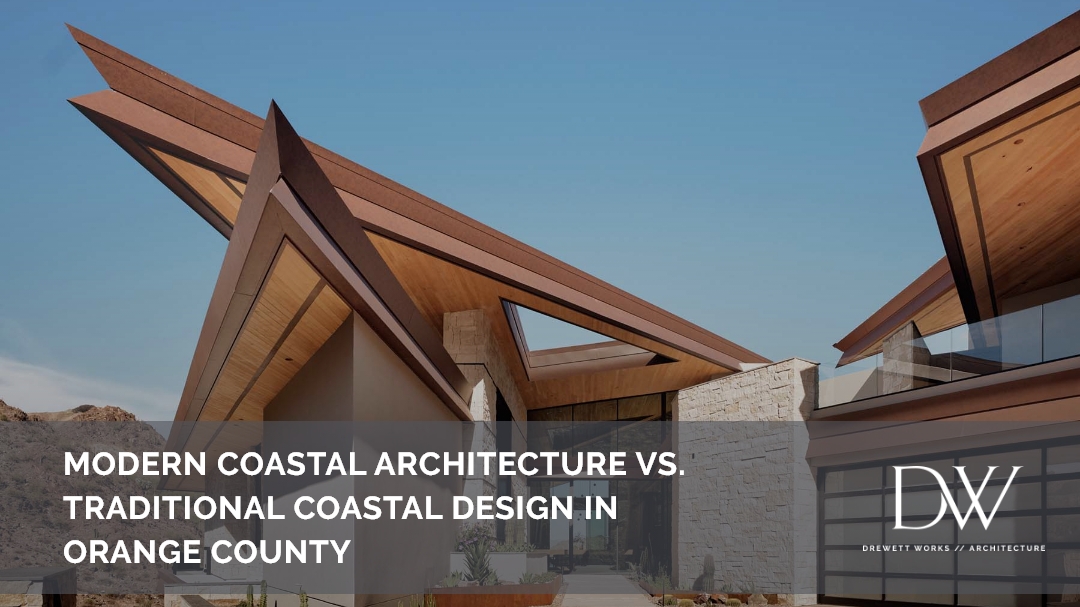
Modern coastal architecture and traditional coastal design each offer a distinct approach to luxury living in Orange County. While traditional coastal homes often feature classic architectural details and historic influences, modern coastal architecture emphasizes clean lines, seamless indoor-outdoor living, expansive glass, and a stronger connection to the surrounding landscape. The best choice depends on your lifestyle, property, and design goals, but both styles can create timeless homes when thoughtfully designed.
Orange County’s coastline provides an exceptional setting for luxury architecture, from the dramatic bluffs of Laguna Beach to the waterfront communities of Newport Beach and the oceanfront estates of Dana Point. Every site presents unique opportunities—and challenges—that influence how a home should respond to its environment.
Understanding the differences between modern and traditional coastal design can help homeowners and developers create residences that not only complement their surroundings but also reflect the way they want to live.
What Is Traditional Coastal Design?
Traditional coastal architecture draws inspiration from classic architectural styles that have evolved along coastlines for generations. Depending on the region, these homes may incorporate elements of Cape Cod, Mediterranean, Spanish Colonial, or East Coast shingle-style architecture.
Common characteristics include:
- Pitched or gabled roofs
- Symmetrical facades
- Decorative trim and detailing
- Covered porches and balconies
- Traditional window proportions
- Warm, timeless materials
Traditional coastal homes often evoke a sense of familiarity and permanence while blending comfortably into established neighborhoods.
What Defines Modern Coastal Architecture?
Modern coastal architecture takes a more contemporary approach by emphasizing simplicity, openness, and a strong relationship between architecture and the natural environment.
Rather than relying on ornamentation, modern homes focus on proportion, natural light, carefully selected materials, and seamless transitions between indoor and outdoor spaces.
Key characteristics often include:
- Clean architectural lines
- Open floor plans
- Expansive walls of glass
- Flat or low-pitched roofs
- Minimal detailing
- Natural stone, wood, steel, and concrete
- Large outdoor living spaces
The result is architecture that feels elegant, understated, and deeply connected to the coastal landscape.
Indoor-Outdoor Living
One of the defining characteristics of modern coastal architecture is its ability to blur the boundary between interior and exterior spaces.
Orange County’s mild climate makes year-round outdoor living possible, allowing architecture to extend beyond the walls of the home. Retractable glass doors, covered terraces, outdoor kitchens, courtyards, and infinity-edge pools create living environments that embrace ocean breezes, natural light, and expansive views.
While traditional coastal homes often incorporate outdoor spaces through porches and balconies, modern architecture tends to integrate them more seamlessly into everyday living.
Maximizing Views
For many luxury coastal homes, the property itself is one of its greatest assets.
Modern architecture often prioritizes capturing panoramic views through expansive glazing, carefully positioned living spaces, and thoughtful site planning. Every room is designed to maximize connections with the surrounding landscape while preserving privacy where needed.
Traditional coastal homes may frame views through more conventional window arrangements, creating a different but equally intentional relationship with the outdoors.
Materials That Reflect the Coast
Both architectural styles often utilize natural materials, but they express them differently.
Traditional homes may feature painted wood siding, brick, tile roofs, or detailed millwork that reference historical precedents.
Modern coastal homes often emphasize authentic materials with minimal finishes, including natural stone, warm wood, exposed steel, architectural concrete, and large-format glass. These materials weather beautifully while complementing Orange County’s coastal environment.
The focus is less on decoration and more on allowing the materials themselves to provide warmth, texture, and character.
Responding to the Site
Every coastal property presents unique opportunities.
Topography, ocean views, neighboring homes, privacy, prevailing winds, and natural light all influence the architectural response. The most successful homes are not defined solely by a particular style but by how thoughtfully they respond to their surroundings.
Whether contemporary or traditional, great architecture feels as though it belongs on its site rather than simply occupying it.
Timeless Design Over Trends
While architectural styles continue to evolve, timeless design remains the goal.
A well-designed coastal home should feel relevant decades from now, not simply reflect current trends. Careful proportions, quality materials, thoughtful craftsmanship, and a strong connection to place contribute far more to lasting value than fashionable design features.
Many luxury homes today blend elements of both traditional and modern architecture, creating residences that respect their surroundings while offering contemporary functionality and comfort.
Choosing the Right Architectural Style
The best architectural style depends on more than personal preference.
Factors such as the property’s location, neighborhood context, views, topography, lifestyle, and long-term goals all influence the design process. Rather than forcing a predetermined style onto a property, the most successful projects begin with understanding the site and allowing the architecture to evolve naturally from its surroundings.
Whether inspired by traditional coastal design or contemporary architecture, exceptional homes are unified by thoughtful planning, timeless materials, and a meaningful relationship with their environment.