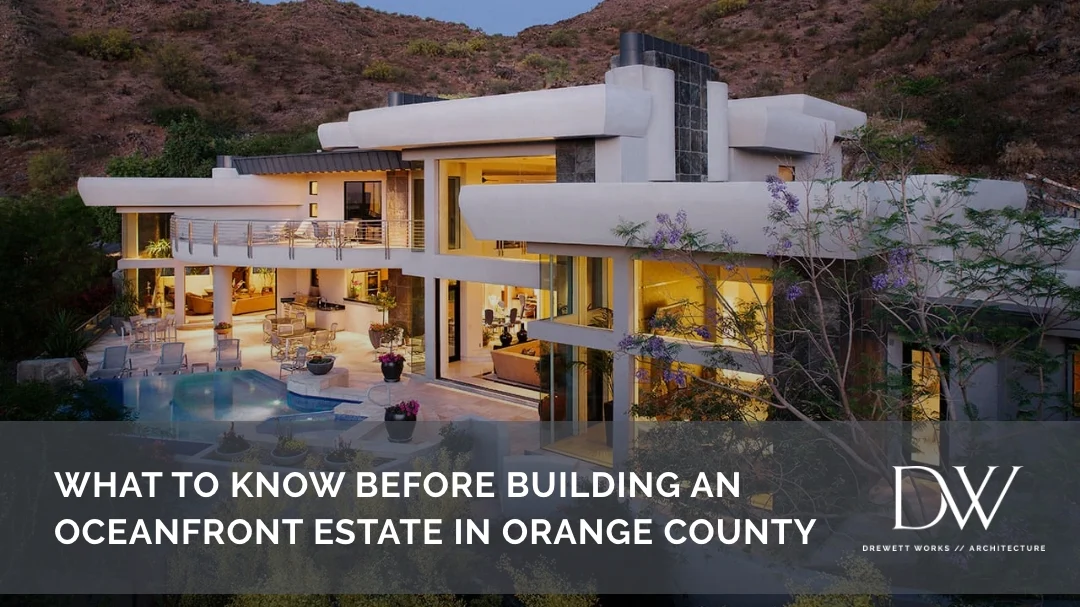
Building an oceanfront estate in Orange County requires careful planning around coastal regulations, site conditions, ocean views, privacy, environmental exposure, and architectural design. The most successful coastal estates balance exceptional living spaces with thoughtful responses to the property’s location, creating a home connected to the Pacific Ocean while remaining comfortable, durable, and timeless.
From the dramatic bluffs of Laguna Beach to waterfront properties in Newport Beach and Corona del Mar, Orange County offers opportunities for custom luxury architecture. Yet oceanfront properties present complexities that can influence design and construction.
Understand the Unique Characteristics of the Property
Every oceanfront site presents different opportunities and constraints. Some offer beachfront settings; others occupy elevated bluffs or narrow parcels overlooking the coastline. Architectural possibilities depend on topography, orientation, surrounding development, and regulations.
Early evaluation should address property boundaries, setbacks, views, bluff or shoreline conditions, neighbors, solar orientation, winds, parking, drainage, erosion, and existing improvements. A custom estate should respond to its particular site rather than begin with a fixed floor plan.
Understand Coastal Development Regulations
Many coastal properties in Orange County are subject to the California Coastal Act, local coastal programs, and city-specific development standards. Depending on location and scope, a coastal development permit may be required. Reviews may address height, setbacks, bluff stability, shoreline protection, environmental resources, and public coastal access.
Newport Beach, Laguna Beach, Dana Point, and other coastal jurisdictions can have different approval processes. Do not assume an existing structure establishes the right to build a larger replacement or that nearby homes indicate what is permitted today. Confirm requirements early with qualified local professionals and authorities.
Design Around Ocean Views
Ocean views are often the defining feature of a luxury coastal property. Successful architecture involves more than maximizing glass facing the water. Living spaces, bedrooms, terraces, and circulation should create intentional relationships with the landscape.
A great room might capture panoramic views while the primary suite offers a more private outlook. A sheltered courtyard may provide a better everyday dining experience than an exposed ocean-facing terrace. The goal is a sequence of carefully considered coastal experiences.
Balance Expansive Views with Privacy
Desirable oceanfront properties are often in established neighborhoods. Large windows and terraces may introduce visibility from adjacent homes, public paths, or beaches.
Strategic building placement, landscape screening, carefully oriented windows, private courtyards, and layered outdoor spaces can preserve privacy without compromising openness. Privacy belongs in the earliest design decisions, not as a late adjustment.
Choose Materials for the Coastal Environment
Salt-laden air, moisture, ultraviolet exposure, wind, and seasonal weather can accelerate deterioration when materials and assemblies are poorly specified. Material selection must consider appearance and long-term performance.
Important details include corrosion-resistant components, appropriate glazing, durable roofing and waterproofing, exterior finishes suitable for marine exposure, carefully detailed balconies, and maintainable exterior hardware. Natural stone, glass, metal, and wood can all contribute to sophisticated coastal architecture when properly selected and detailed.
Create Seamless Indoor-Outdoor Living
Indoor-outdoor living is central to Southern California architecture. Covered terraces, outdoor kitchens, dining patios, pools, courtyards, and fire features can extend primary living environments.
Conditions vary within the same property. An exposed terrace may offer views but strong winds, while a protected courtyard offers more comfort. Design a variety of outdoor rooms instead of relying on one large terrace. Operable glass and consistent material transitions can strengthen the connection between inside and out.
Evaluate Coastal Geology and Structural Conditions
Coastal bluffs, steep slopes, and areas affected by shoreline processes may require detailed geotechnical evaluation. Soil conditions, bluff stability, erosion, seismic considerations, drainage, and foundations can influence building placement and feasibility.
Some locations require coastal hazard assessments or other technical studies. Early coordination among the architect, geotechnical engineer, structural engineer, and authorities supports realistic planning.
Design for a Refined Coastal Lifestyle
An oceanfront estate should reflect its owners’ lives. Some prioritize entertaining; others value family accommodation, wellness, privacy, or outdoor recreation. Programs may include generous gathering rooms, private suites, guest accommodations, fitness spaces, offices, wine storage, outdoor dining, and flexible multi-generational spaces.
Luxury is not simply square footage. It is the quality of the spaces and how naturally they support everyday living.
Consider Modern Coastal Architecture
Contemporary oceanfront architecture often emphasizes clean lines, natural materials, carefully proportioned rooms, and connections to landscape. Modern coastal design need not feel stark. Warm wood, natural stone, textured surfaces, and controlled daylight create welcoming environments.
The relationship between solid forms and transparent openings can add depth, privacy, and visual interest. The goal is timeless architecture rather than a temporary aesthetic trend.
Plan the Process Carefully
An oceanfront estate may involve architectural design, coastal permitting, geotechnical studies, structural engineering, environmental review, and neighborhood requirements. Construction access and staging can be challenging on narrow or steep sites.
Establish a realistic sequence for feasibility, design, approvals, and construction planning. Early coordination reduces the risk of designing around assumptions that prove incompatible with site constraints.
Create a Coastal Estate for Generations
A remarkable oceanfront estate should offer more than immediate visual impact. Timeless architecture considers landscape, durability, privacy, flexibility, and changing family needs. The residence may become a multi-generational gathering place or a private retreat balancing entertaining with seclusion.
Architecture Inspired by the California Coast
Drewett Works approaches luxury residential architecture through thoughtful site planning, refined contemporary design, natural materials, and indoor-outdoor relationships. Whether envisioning a coastal estate in Newport Beach or a hillside residence in Laguna Beach, contact Drewett Works to discuss your vision for luxury architecture in Orange County.