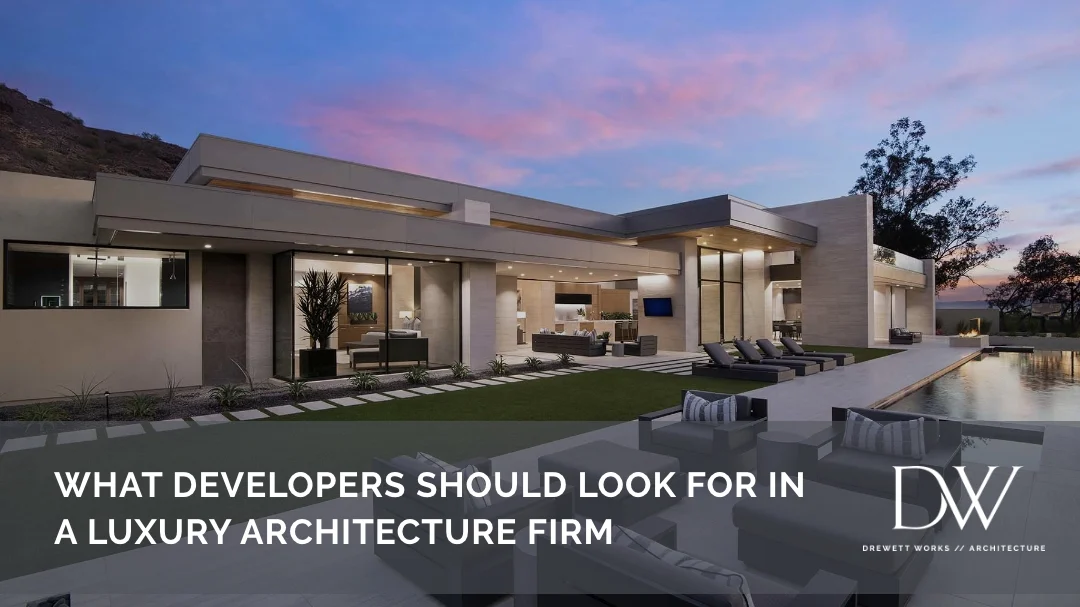
Developers should look for a luxury architecture firm that combines exceptional design with an understanding of development goals, site conditions, market positioning, and the complexities of bringing high-end projects to life. The right architectural partner does more than design beautiful buildings. They help establish a distinctive identity, coordinate the design vision, anticipate challenges, and create environments that appeal to discerning buyers and guests.
For developers planning luxury residential communities, boutique resorts, branded residences, or private lifestyle destinations, selecting an architect is one of the most consequential early decisions. Architecture influences how a development is perceived, experienced, and differentiated in a competitive market.
Experience with Complex Luxury Projects
Luxury developments often involve far more than a single building. A project may include private residences, shared amenities, hospitality facilities, wellness environments, outdoor gathering spaces, and extensive landscape planning. An architecture firm should understand how these components work together to create a cohesive experience.
Developers should evaluate experience with high-end custom residential architecture, luxury residential communities, boutique hospitality, clubhouse and amenity architecture, challenging sites, and projects involving multiple design disciplines. Relevant experience is important, but the ability to apply architectural thinking to a new development is equally valuable.
A Distinctive Architectural Point of View
In the luxury market, architecture is often one of a development’s strongest differentiators. Buyers and guests increasingly seek destinations that feel authentic rather than interchangeable. A successful architecture firm should have a recognizable design philosophy while remaining responsive to each project’s location, purpose, and audience.
Architecture in the Sonoran Desert should respond differently than a mountain residence in Park City or a coastal development in Baja Mexico. The goal is not to impose a signature style on every property. It is to create architecture that feels distinctive, appropriate, and enduring.
An Understanding of the Development’s Target Market
Architecture should reflect the expectations of the people who will ultimately experience the property. A private residential community targeting seasonal homeowners may have different requirements than a branded resort development or a boutique hotel designed for international travelers.
Developers should ask who the target buyer or guest is, what lifestyle the development supports, how it differs from competitors, and how privacy, social interaction, and amenities should be balanced. Understanding these priorities aligns architectural decisions with the broader development vision.
The Ability to Create a Cohesive Architectural Identity
For large residential and hospitality developments, individual buildings should contribute to a unified sense of place. That does not mean every residence or amenity building must look identical. Successful developments establish relationships through materials, proportions, landscape connections, and consistent design principles.
A well-conceived architectural identity can connect private residences, clubhouses, wellness facilities, and hospitality spaces without sacrificing individuality. This is especially important for lifestyle communities and branded residences, where the overall experience matters as much as any individual building.
A Site-Responsive Design Philosophy
Exceptional luxury architecture begins with understanding the land. Topography, climate, views, natural light, vegetation, privacy, and surrounding development should influence architectural decisions from the earliest stages.
On a mountain property, design may prioritize slope, snow conditions, seasonal access, and views. Coastal projects require consideration of exposure, materials, privacy, and environmental conditions. In desert environments, orientation, shade, and indoor-outdoor connections are essential. A site-responsive architect creates a stronger relationship between the built environment and its setting.
A Collaborative Approach to Development
Luxury projects involve developers, engineers, landscape architects, interior designers, contractors, and sometimes hospitality operators. An effective architecture firm communicates clearly and collaborates throughout the development process. Developers should understand how the firm handles design reviews, consultant coordination, documentation, and major decisions.
Design That Supports Long-Term Value
Architectural quality should be evaluated beyond the initial visual impression. Material durability, flexibility, maintenance requirements, and indoor-outdoor relationships contribute to long-term performance. Timeless architecture means making deliberate choices that remain compelling as preferences evolve.
Evaluate the Firm’s Portfolio and Design Recognition
Completed work offers insight into capabilities, detail, and design consistency. Developers should look beyond photography to understand how projects respond to sites and program requirements. Industry recognition, including Gold Nugget Awards and Best in American Living Awards, can offer additional context but should complement a review of relevant experience and collaborative fit.
Architecture That Supports a Larger Vision
Drewett Works approaches luxury architecture with an emphasis on thoughtful design, authentic materials, and a strong relationship between architecture and place. From private residences to hospitality-inspired environments and community amenities, the firm brings a refined architectural perspective to projects intended to make a lasting impression. Contact Drewett Works to discuss your vision for a luxury residential or hospitality development.